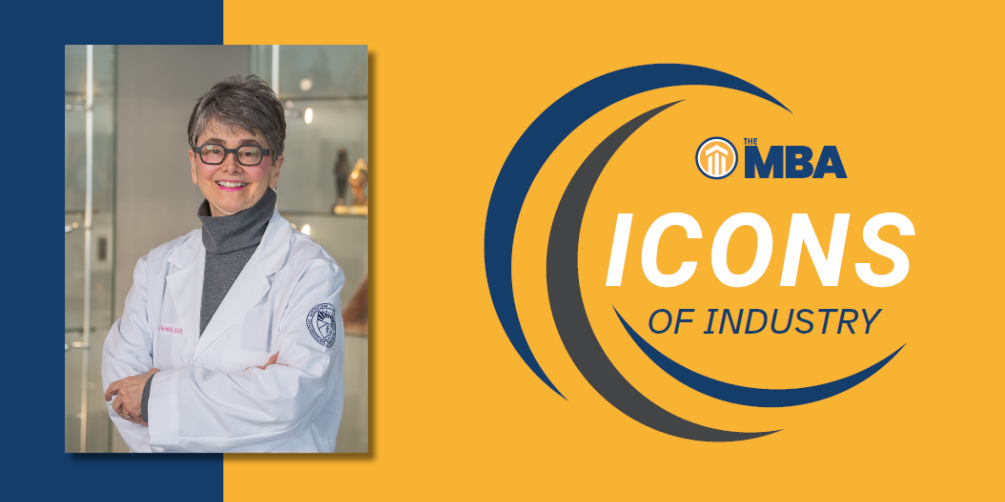
In celebration of its 120th year, The MBA is recognizing leaders of longtime member organizations who have contributed to the Association’s longevity, the regional business community as well as their operations. Here, Silvia Ferretti, D.O., provost, senior vice president and dean of Academic Affairs at Lake Erie College of Osteopathic Medicine (LECOM), reflects on her professional journey and influence on medical education.
Dr. Ferretti, your career is truly remarkable. What initially inspired you to pursue a career in medicine and medical education, and how have your early experiences shaped your leadership style today?
My passion for medicine began in my early years, when I myself was a patient, as a teenager, and had the opportunity to observe the profound impact that health-care professionals had on individuals and communities. I was particularly inspired by the holistic approach that osteopathic medicine offers — emphasizing the connection between mind, body, and spirit, as well as preventive care. This perspective resonated deeply with me, and I realized early on that I not only sought to practice medicine but also to contribute to the education and shaping of future generations of health-care leaders. My early experiences in clinical practice, rehabilitation, and teaching reinforced the importance of empathy, communication, and adaptability — values I strive to incorporate into my leadership style today. Over time, I have come to realize that leadership in academic medicine is not only about decision-making, but also about fostering a culture of self-responsibility, collaboration and lifelong learning.
As an icon of industry, you’ve influenced not only medical education but also the broader direction of health care. How would you describe your leadership philosophy, and how has it evolved over time?
My leadership philosophy is centered upon empowerment, integrity and service. I believe that the most effective leaders listen first and lead by example, ensuring that they make decisions in the best interest of the people they serve. With a focus upon individual performance combined with an emphasis upon team development and institutional collaboration, my leadership holds steady, a key to fostering success in any organization. Leadership is not simply about achieving goals — it is also about creating an environment in which others can succeed, feel valued and contribute meaningfully. As health care continues to evolve, I have adapted my leadership approach to be more data-driven and patient-centered, while also promoting innovation and adaptability in response to the rapid changes in the field.
LECOM, which focuses on preparing osteopathic physicians, dentists, pharmacists and podiatrists through various learning pathways, was recognized by U.S. News & World Report as one of 2025’s Best Medical Schools. From your perspective, how does osteopathic medicine contribute to the broader health-care landscape and where do you see it fitting into the future of health-care delivery?
Osteopathic medicine plays a vital role in the broader health-care landscape by offering a unique, patient-centered approach that emphasizes the body’s ability to heal itself when provided with the right environment. Our focus upon prevention, whole-person care, and the integration of the musculoskeletal system into diagnosis and treatment sets us apart in addressing the root causes of illness, not just treating symptoms. As we move into the future, I see osteopathic medicine becoming even more integral to health-care delivery, especially as the emphasis upon holistic care, preventive medicine and patient engagement continues to grow. Our graduates are well-prepared to meet the complex healthcare needs of underserved populations, which is essential as the United States grapples with disparities in access to care.
Being a prominent female leader in the academic and health-care sectors, you’ve undoubtedly faced challenges in a once male-dominated field. How have these experiences shaped the way you lead?
I have certainly faced my share of challenges as all medical professionals do. These challenges have shaped my leadership in profound ways, particularly in my commitment to supporting those who show promise and merit in achieving leadership roles. I have learned to approach every situation with resilience, patience and grace — qualities that came from my parents’ example — and ones that help foster an environment of confidence-building and mutual respect. I am deeply committed to mentorship and to creating opportunities for others to rise to leadership positions, and I work to break down barriers for those who may not have traditionally had access to such opportunities. Ultimately, my experiences have taught me the value of leading by example and the importance of hard work and perseverance in the face of adversity.
“I have found the cure for all my difficulties: it is to trust in God and to work with all my heart.”
This quote from Mother Cabrini highlights unwavering faith and commitment, qualities that resonate with me in a mission to overcome challenges and to make meaningful change.
What are some key lessons you’ve learned about leadership along the way?
One of the most important lessons that I have learned is that leadership is not about having all the answers, but about asking the right questions and being willing to take action when needed. It is essential to surround yourself with a solid, experienced, focused and dedicated team and to empower them to do their best work. Leadership is steady, standard-based constancy that can adapt (while still maintaining those standards) to the needs of the organization and to the people whom we serve.
In your current role, you oversee a wide array of academic and administrative functions. What drives you to continue pushing the boundaries of educational excellence at LECOM, and how do you maintain your focus and motivation in such a demanding role?
I am driven by a deep belief in the mission of LECOM and the transformative power of education — indeed in a commitment to academic excellence. Every day, I am inspired by the students, faculty and staff who are dedicated to making a difference in the world. Maintaining focus and motivation in such a demanding role requires me to stay connected to our core values, remind myself of the greater picture and to find joy in the small wins along the way. Additionally, I rely upon the support of my team and colleagues, who are equally committed to pushing the boundaries of excellence. Having a strong, collaborative culture at LECOM makes all the difference in maintaining momentum.
Technology is rapidly transforming the world. How have you integrated new technological tools into LECOM’s academic and clinical programs, and where do you see the role of emerging technologies in shaping the future of medical education?
Technology has become an essential tool in modern medical education, and we have embraced it to enhance both our academic and clinical programs. From simulation labs to telemedicine platforms, we have integrated technologies that allow students to gain hands-on experience and to engage in real-world scenarios. Virtual learning environments, artificial intelligence (AI) and machine learning are increasingly important in medical education, allowing us to offer more personalized and adaptive learning experiences. In the future, I believe technology will continue to revolutionize medical education by making it more accessible, efficient and tailored to individual learning needs. Through all of this transformation and technological advance, we must always remember to hold fast to the human touch and to understand that as healers, we are first responsible to the Author of Life who imbues within us the gifts that we bring forth into this noble calling.
LECOM’s economic impact on the local community and the broader region is significant. Can you share some insights into how LECOM contributes to the economy – here in Erie, as well as in your other locations in Bradenton, Florida; Elmira, New York; and, Greensburg, Pennsylvania?
LECOM has a profound economic impact upon the regions in which we operate and far beyond. We provide employment, support local businesses, and attract students and faculty from across the globe. Beyond the direct economic contributions, our graduates play a crucial role in improving the health-care infrastructure of these communities, often serving as primary care physicians, dentists, podiatrists and pharmacists in underserved areas. Our partnerships with local hospitals, health-care organizations and government agencies also allow us to help shape health-care policy and practice at the regional level and beyond.
As a longtime member of The MBA, what does being a member mean to you, and what are some of the programs and services you have utilized?
Being a member of The MBA has been invaluable throughout my career. The Association provides a unique platform for networking, collaboration and professional development. I have had the opportunity to participate in numerous leadership and educational programs, which have helped shape my approach to organizational development and health-care leadership.
Additionally, The MBA’s advocacy on behalf of medical schools and educational institutions has been instrumental in advancing the mission of LECOM and other institutions like ours.
Is there anything you’d like to add?
I would just like to express my deep gratitude to all of the faculty, staff, students, and alumni at LECOM who continue to make our institution a place of excellence. As we approach our 35th year of excellence in medical education, I continue to assert that LECOM’s success is a direct result of their hard work, dedication and commitment to our mission. I am also hopeful for all that the future holds for LECOM and for osteopathic medical education as a whole.
For more information about LECOM, visit lecom.edu.