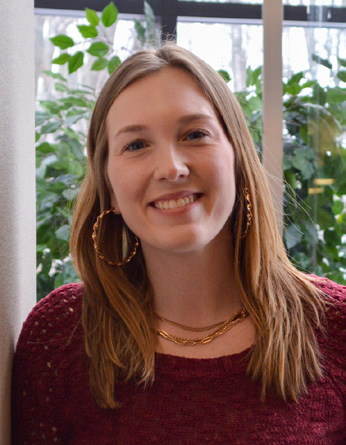
At time when work, family and personal demands constantly compete, prioritizing health and wellness has become essential for employers, employees and their families. Here, next-generation leader Kaitlyn Falk, age 30, district wellness manager for Erie’s Public Schools, an instructor at Motivate Studios and past organizer of community wellness programs for Our West Bayfront and Erie Downtown Partnership, shares her dedication to improving the wellness of the Erie community and the importance of staying active — whether at work, home or school.
You’re a native of Buffalo, but you’ve been a part of the Erie community since attending Gannon University where you earned a bachelor’s degree in nutrition and human performance. What attracted you to a career in health and wellness?
I was always interested in nutrition and healthy eating. When I was a junior in college, I did my internship with the Gannon Wellness Department at East and Strong Vincent, which were high schools at the time. We did an after-school fitness and nutrition program called Club Fit for girls, and I was a nutrition intern, so I taught the girls how to make healthy recipes. I cooked with them. I did nutrition lessons and exercise. I absolutely loved it!
The director of the program was at AmeriCorps VISTA, and I said, “How do I get your job? This is what I want!” So, I applied. I worked out my class schedule so I could take my classes before and after work. I served in the AmeriCorps for two years at Gannon, working within the Erie School District. That’s where I found my passion and purpose for teaching groups how to make healthy choices and creating health and wellness opportunities in the community (e.g. Country Fair Cooking, West Bay Fit, West Bay Walks).
What is your leadership approach to health and wellness?
When I was first studying about wellness, I learned about the Wellness Coalition of America’s AMSO Model, which stresses that in order for people to make health behavior changes, they need to have awareness, motivation, skills and opportunities.
First, people need to be aware of what food and exercise can do. Then, they need to be motivated, which can look different for each person. Maybe for a child, it’s more about fun. For an adult, maybe it’s about affective health (a family history of diabetes).
Skills are important so that they know what to do. Do you know how to exercise? Do you know how to prep healthy food? Opportunities are things like having safe and accessible parks, walking routes, exercise programming or cooking lessons.
When you give people all four components, they are more able to make that change.
How does investing in wellness programs, like those at EPS, benefit not only students but the overall community?
Wellness is a long game. When we are giving children the skills and opportunities to have healthy lifestyle behaviors, they’re more likely to carry them all throughout life.
Also, in the short term, as kids are getting interested about something, the adults around them are learning as well. Sometimes kids can be the reason that you want to make a change as an adult.
Which wellness initiatives have shown the greatest impact and what made them successful?
One that I am really grateful for and excited about is our Wellness Conference for administrators that was held this past summer. We had all the administrators, principals, essential admins come to a conference and learn why wellness matters. We brought in all different kinds of speakers. We had our local district experts speak on topics like chronic health conditions, the National School Lunch Program and kinesthetic learning.
Now that principals and central admin are on board, they understand the why, they understand how this affects our children, and they’re more likely to be supporters moving forward (just like our step challenges for staff, healthy cooking programs for after-school clubs or our Brain Boost Bootcamps).
The Pennsylvania Department of Health is now doing a similar Wellness Conference, which I’ve been able to help with. This work can be replicable at other districts across the state and could have a lasting impact. Much of this success is due to the Pennsylvania Department of Health receiving a CDC grant to implement school wellness in our state — with Erie being the priority district!
How can organizations—not only schools but all employers — create a culture that encourages mental, physical and emotional well-being?
When people feel a sense of belonging, when they feel good and healthy and strong in their bodies, when they feel like they have a clear and focused brain, they don’t have other stressors going on, they’re going to do better at their job.
If the goal for a company is productivity, productivity is more likely to happen when employees feel whole and feel well. Organizations can focus on individual well-being and create a culture that promotes opportunities for staff to engage in different wellness activities. Instead of happy hour, we have “happier hours” where we have an opportunity for physical activity — walks, pickleball, yoga, Pilates.
Also, if you are a leader of a company or a manager of a team, you must have a buy-in. Start with why wellness matters to you and why wellness matters to your organization.
What advice would you give to our readers about the small steps they can take to get active?
The first easy one is walk more if you’re able or just simply increase your daily movement. That could be moving around the house doing chores, taking your dog on a walk, talking a walk in the parking lot while your kid is at soccer practice or parking your car farther away at work. By increasing our normal daily physical activities, we’re decreasing sedentary behavior, which is one of the most threatening things to our health. Sitting is the new smoking.
On the food side, I would say increase your fruits and vegetables. We should strive for five every day. Everything else can flow from that!
Is there anything you would like to add?
A little motivation or inspiration for people: You matter. A lot of times, you focus on everything else — work, family and other responsibilities — and you forget that you are worth taking care of, and that you are in charge of you. You only have one body, so how do you want to take care of it?